36 minutes
|
January 14, 2025
36 minutes
|
January 14, 2025
#16 Chain of challenges
Inside the Global Supply Chains
Listen on


About The Speaker
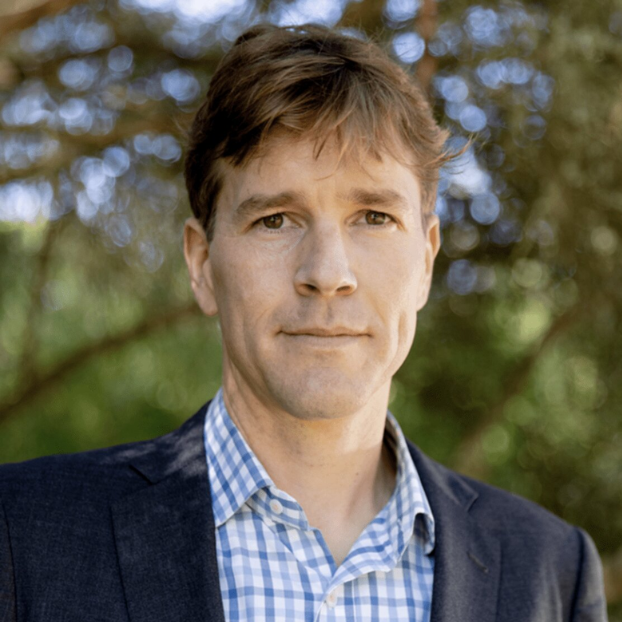
Peter S. Goodman is the global economic correspondent for The New York Times, based in New York. He appears regularly on The Daily podcast, as well as major broadcast outlets like CBS News, CNN, the BBC, and MSNBC.
He was previously Executive Global News and Business Editor of the Huffington Post, where he oversaw award-winning investigative, international, business, and technology reporting.
Over the course of three decades in journalism, Goodman has covered some of the most momentous economic transformations and upheavals – the global financial crisis of 2008 and the Great Recession, as the Times’ New York-based national economic correspondent; the emergence of China into a global superpower as the Shanghai bureau chief for The Washington Post; the advent of the Web followed by the dot-com crash as a technology reporter for the Post, based in Washington. During a five year stint in London for the Times, he wrote about Brexit, the rise of right-wing populism in Europe, the crises in Turkey in Argentina, the endurance of economic apartheid in South Africa, the impacts of Trump’s global trade war, the struggles of migrant workers in the Persian Gulf, the tragic failure of land reform in the Philippines, and the catastrophe of the coronavirus pandemic.
Goodman began his career as a feature writer in Japan before freelancing from Southeast Asia, based first in Manila and then in Jakarta. His first full-time newsroom job was in Alaska as a reporter at the Anchorage Daily News. He has reported from more than 40 countries, including stints in conflict zones such as Iraq, Cambodia, Sudan and East Timor.
He has been recognized with some of journalism’s top honors, including two Gerald Loeb awards, and eight prizes from the Society of American Business Editors and Writers — most recently for economic coverage in 2022, for a series on the future of globalization. His work in China received a citation from the Overseas Press Club. His coverage of the Indian Ocean tsunami garnered a prize for breaking news from the American Society of Newspaper Editors. His work as part of the Times’ series on the roots of the 2008 financial crisis was a finalist for the Pulitzer.
Goodman is the author of three books, most recently HOW THE WORLD RAN OUT OF EVERYTHING: Inside the Global Supply Chain (HarperCollins 2024). His previous book, DAVOS MAN: How the Billionaires Devoured the World (HarperCollins, 2022), a San Francisco Chronicle best-seller, was listed by NPR as one of the best books of the year. His first book, PAST DUE: The End of Easy Money and the Renewal of the American Economy (Times Books, 2009), was named one of Bloomberg’s top 50 business titles.
Episode Description
Discover the changing landscape of global supply chains with Peter Goodman, The New York Times’ global economic correspondent. He sheds light on the seismic shifts in global supply chains and the vulnerabilities laid bare by the COVID-19 pandemic and geopolitical tensions. Uncover how the rise of economic nationalism and elite influence is reshaping trade and labour, turning the promise of liberalised trade on its head.
Peter’s insights from his book, “How the World Ran Out of Everything: Inside the Global Supply Chain,” guide us through the complex dance between globalisation, market concentration, and economic inequality. We discuss the unexpected consequences of long-standing policies and the fragility of supply chains optimised for efficiency over resilience. From the dominance of a few corporations to the role of domestic policy failures, Peter paints a picture of how monopolistic power and democratic process capture have moulded today’s economic landscape.
As we gaze into the future, explore the transformations in global supply chains with a focus on nearshoring and reshoring. Understand the emerging roles of Vietnam, India, and Mexico as pivotal players in this evolving scene. Climate change’s impact on supply chains demands attention, prompting businesses to rethink production proximity and resilience. Peter critiques strategies like just-in-time inventory, urging a reevaluation of corporate incentives and labour rights for a sustainable and equitable global trade future. Join us for this compelling conversation that dissects the past, present, and future of global trade dynamics.
Additional inspirations from Peter S. Goodman
- Link to his latest bookHOW THE WORLD RAN OUT OF EVERYTHING: Inside the Global Supply Chain