41 minutes
|
April 2, 2025
41 minutes
|
April 2, 2025
#21 Relationships Over Resources
Why Human Ingenuity Drives Corporations in the 21st Century
Listen on


About The Speaker
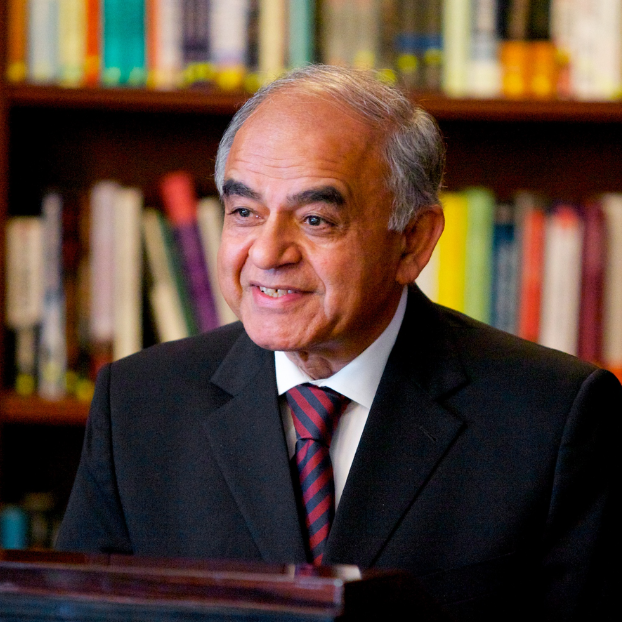
John Kay is one of Britain’s leading economists. His work is centred on the relationships between economics, finance and business. His career has spanned academic work and think tanks, business schools, company directorships, consultancies and investment companies. Today his main focus is on writing and he is renowned for his ability to express complex ideas clearly and succinctly.
John has been a Fellow of St John’s College, Oxford since 1970. In 1979 he became research director and then director of the Institute for Fiscal Studies, establishing it as one of Britain’s leading think tanks with a fearsome reputation for independence. In 1986 he founded an economic consulting business which became Europe’s leading autonomous economics consulting company. He was the first dean of Oxford’s Said Business School and has held chairs at London Business School, the University of Oxford, and the London School of Economics. He is a Fellow of the British Academy and the Royal Society of Edinburgh.
Born and educated in Edinburgh, he has been a member of the Scottish Government’s Council of Economic Advisers and chaired the Review of Equity Markets and Long Term Decision Making which reported to the UK government’s Department of Business, Innovation and Skills. Following the outcome of the referendum on British membership of the European Union in June 2016, he was appointed a member of the Standing Council on Scotland and Europe appointed by the First Minister of Scotland, Nicola Sturgeon.
John Kay is a director of several public and private companies. He is the author of many articles and has contributed regularly to the Financial Times for over 20 years. His books include Foundations of Corporate Success (1993), The Truth about Markets (2003) and Obliquity (2011): his most recent book, Other People’s Money, was published in 2015 to wide acclaim. The second edition of his 2009 book The Long and the Short of It – finance and investment for normally intelligent people who are not in the industry was published in November 2016. Radical Uncertainty, jointly written with Mervyn King, was published in March 2020, and Greed is Dead, jointly written with Paul Collier, was published in July 2020.
John’s work has been honoured by many different bodies. He became Commander of the British Empire in the Queen’s New Year Honours List of 2014, and was knighted in the Queen’s Birthday Honours List of 2021. He has been elected an honorary fellow of the Society of Investment Professionals and the Chartered Institute of Taxation and received the Daniel J Forrestal III award for Leadership in Professional Ethics and Standards of Investment Award from the Chartered Financial Analysts Institute. He has been awarded honorary degrees by Heriot Watt University, and his alma mater the University of Edinburgh. The Truth about Markets was declared Politics Book of the Year in 2005 by the Political Studies Association. He received the Senior Wincott Award for Financial Journalism in 2011 for his Financial Times columns; Other People’s Money was a book of the year for The Economist, Financial Times, and Bloomberg and was shortlisted for the Orwell Prize for Political Writing.
Episode Description
Sir John Kay delivers a masterful analysis of how corporations have evolved from their industrial origins to today’s knowledge-driven enterprises, revealing profound insights about the changing nature of business success.
Drawing on his distinguished career spanning academia, business, and finance, Kay traces the corporate journey from the industrial titans of the Gilded Age through the professionally managed firms of mid-20th century America to today’s “hollow corporations” like Apple. His historical perspective illuminates the critical shift that occurred when businesses abandoned their focus on building excellent, enduring companies in favor of maximizing shareholder value—a shift Kay argues has been self-defeating.
The conversation explores fascinating case studies of once-dominant corporations that lost their way. General Electric, once America’s most admired company under Jack Welch’s “make the numbers” philosophy, has now broken itself apart. Boeing abandoned its culture of engineering excellence for financial metrics and suffered devastating consequences. ICI, Britain’s industrial crown jewel, collapsed within 15 years of changing its mission statement from applying chemistry to creating shareholder value.
Kay argues persuasively that human relationships and ingenuity have superseded physical assets as the true drivers of modern business value. The smartphone exemplifies this transformation—a device replacing libraries, record players, and atlases in our palm. This shift demands rethinking how businesses operate and create value in an economy where capital intensity has diminished while financial influence has paradoxically increased.
For leaders navigating today’s complex business landscape, Kay offers this wisdom: focus on building great products that customers value and creating organizations where employees proudly identify with the mission. The score—profit—will take care of itself. As we grapple with questions of corporate purpose, sustainability, and societal trust, Kay’s insights provide a thoughtful roadmap for businesses seeking authentic, lasting success.
Additional inspirations from John Kay
- John’s Website www.johnkay.com