 52:23 minutes
|
July 2, 2025
52:23 minutes
|
July 2, 2025
#26 The Four-Day Workweek
Revolution or Risk?
Listen on


About The Speaker
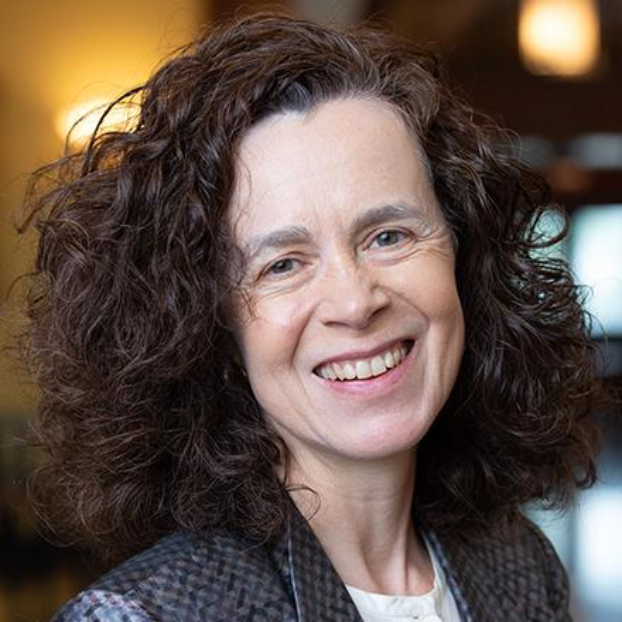
Juliet Schor is an economist and Professor of Sociology at Boston College. In 2022 she became the lead researcher for pathbreaking trials studying hundreds of companies instituting four day, thirty-two hour workweeks with five days’ pay. The research, which is ongoing, finds large improvements in well-being outcomes and success for the participating organizations. Her book, Four Days a Week (HarperBusiness, 2025), details these findings. Schor has been researching worktime since the 1980s and is the author of The Overworked American: the unexpected decline of leisure (Basic Books, 1992), which was a national bestseller. Schor has also researched sustainable consumption and the link between climate change and worktime, and, since 2011,the platform economy. A graduate of Wesleyan University, Schor received her Ph.D. in economics at the University of Massachusetts. Before joining Boston College, she taught at Harvard University for 17years in the Department of Economics and later, the Committee on Degrees in Women’s Studies. Schor’s other books include After the Gig: how the sharing economy got hijacked and how to win it back (California, 2020), Plenitude: the new economics of true wealth (Penguin Press 2010), Born to Buy: The Commercialized Child and the New Consumer Culture (Scribner 2004), and The Overspent American: Why We Want What We Don’t Need (Basic Books, 1998).Schor is the recipient of numerous awards, and is an Elected Fellow of the AAAS and, most recently, the 2024 Honorary Fellow of the Society for the Advancement of Socio-Economics. Her work has been supported by the National Science Foundation, the MacArthur Foundation, he Sloan Foundation and the Russell Sage Foundation, among others. A frequent contributor to public discourse and media, Schor’s Ted talk on “the case for the four day week” has more than three million views.
Episode Description
What if working less could actually mean achieving more? The four-day workweek has emerged from pandemic-era workplace experiments as perhaps the most promising innovation in how we structure our professional lives in decades. But misconceptions abound about what this shift really means and whether it’s sustainable for businesses beyond a temporary feel-good measure.
Professor Juliet Schor, economist and sociologist at Boston College, joins us to share groundbreaking research from hundreds of companies that have implemented four-day workweeks without cutting pay. Her findings challenge everything we thought we knew about productivity, burnout, and work culture. Most companies aren’t just compressing the same work into fewer days—they’re fundamentally rethinking how work gets done.
The data tells a compelling story: 70% of employees report reduced burnout, while companies see dramatically lower turnover rates and maintained or improved productivity metrics. Perhaps most surprising is that 90% of organizations continue with four-day schedules a year after implementation. We explore the “100-80-100 model” (100% of pay for 80% of the time, delivering 100% of productivity) and how it creates what Professor Schor calls a “forcing function” that eliminates inefficient workplace practices many organizations have tolerated for decades.
From manufacturing floors to professional services, from startups to established institutions, the four-day workweek is proving viable across industries—though with important variations in implementation. We examine how companies make the transition, common pitfalls to avoid, and why Europe is leading this global movement. Professor Schor also addresses concerns about equity, sharing how shortened workweeks are actually improving gender equality at home and work.
As AI threatens to displace workers across industries, could reducing hours per job rather than eliminating positions be our best path forward? Join us for a fascinating exploration of how rethinking our relationship with work time might be the key to a more productive, sustainable, and humane future of work.
Additional inspirations from Juliet B. Schor
Link to Professor Schor’s latest book: Four Days a Week. The Life-Changing Solution for Reducing Employee Stress, Improving Well-Being, and Working Smarter.